

Since marrying Prince Harry in 2018, Meghan Markle has faced relentless online trolling, much of it steeped in racism, misogyny, and conspiracy theories. The attacks intensified after the couple stepped down as senior working royals in early 2020 and relocated to North America, first to Canada and later to the United States. There, they welcomed their second child, daughter Lilibet, in June 2021, following the birth of their son Archie in May 2019.
Despite official documentation and public appearances confirming Meghan’s pregnancies, conspiracy theorists continue to circulate unfounded claims that the Duchess of Sussex used a surrogate. These rumors recently gained traction again after Meghan released a video from a maternity ward showing her, visibly pregnant, dancing with Prince Harry.
These suggestions are entirely false. “Rumors suggesting that Meghan, the Duchess of Sussex, used a surrogate to welcome her children are entirely false.” Both UK and U.S. birth records list Meghan as the biological mother of Archie and Lilibet, with no indication or suggestion of surrogacy.
The surrogacy theory emerged in 2019 during Meghan’s first pregnancy. At the time, the couple’s desire for privacy—such as delaying the public announcement and making minor amendments to the birth certificate—was seized upon by conspiracy theorists. One viral screenshot that fueled speculation was later confirmed to be fabricated and debunked by Snopes.
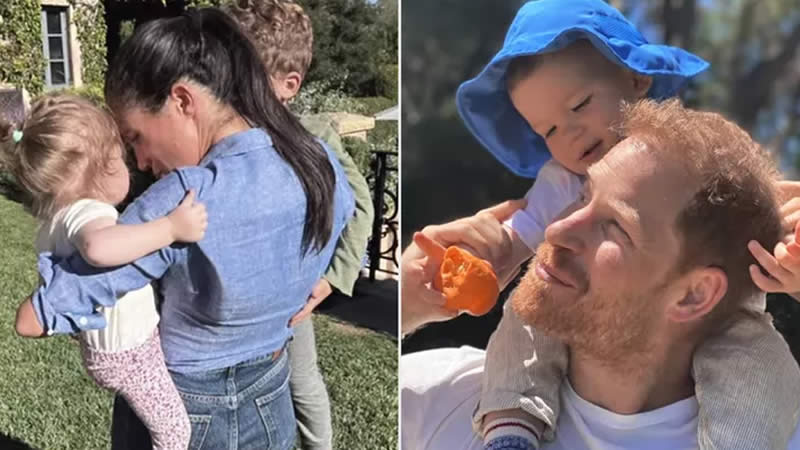
The false claims have also been propagated by members of Meghan’s estranged family, including half-sister Samantha Markle and father Thomas Markle. However, repeated investigations by credible fact-checking organizations have found no evidence supporting the surrogacy claims. They remain part of a larger disinformation effort aimed at undermining Meghan’s reputation.
“Efforts to refute these rumors—such as clips shared from her 2021 Harry & Meghan documentary or a playful ‘twerking’ video in the hospital during her second pregnancy—have only intensified the false narrative,” reports indicate, noting that conspiracy theorists often twist evidence to fit preconceived biases.
These attacks underscore a broader cultural issue: the toxic intersection of celebrity obsession, online hate, and racial and gender-based harassment. Meghan has been disproportionately targeted in comparison to other members of the royal family, a reflection of what analysts describe as “coordinated online hate campaigns” driven by a mix of ideological extremism and clickbait economics.
The persistence of such baseless accusations, despite overwhelming evidence to the contrary, serves as a stark reminder of the power of disinformation and the challenges public figures face in the digital age.