
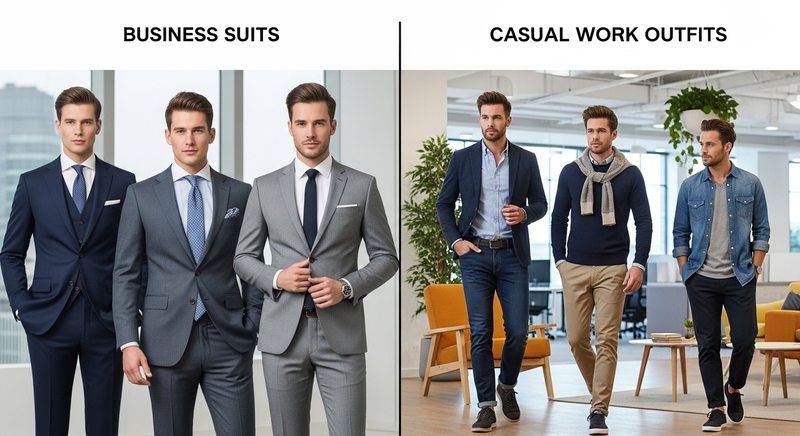
Remember when showing up to the office meant one thing: suit and tie, no questions asked? Those days are long gone. Walk into any modern office today, and you’ll see everything from three-piece suits to sneakers and jeans—sometimes in the same conference room.
The shift didn’t happen overnight. Tech companies started it, and then everyone else followed. Now we’re all trying to figure out the same thing: what’s the right call for today’s meeting? The answer isn’t always clear, and that’s exactly why getting it right matters more than ever.
Finding that sweet spot between looking professional and feeling like yourself isn’t about following rigid rules anymore. It’s about reading the room, understanding what your work actually demands, and showing up in a way that makes you feel ready to handle whatever the day throws at you.
Understanding Business Suits

A business suit is pretty straightforward: a matching jacket and trousers, usually in wool or a wool blend. Add a dress shirt, tie, and proper shoes, and you’ve got the uniform that’s meant “serious business” for the past century.
But here’s the thing—suits still matter, even in our casual-everything world. Court appearances, high-stakes client pitches, executive meetings, and formal presentations—these moments still call for the full setup. Try walking into a courtroom in chinos and see how that goes.
There’s real psychology behind the suit. When you put one on, something shifts. Your posture changes. You speak differently. Other people treat you differently, too. Fair or not, a well-fitted suit still carries weight. It signals preparation, respect for the occasion, and that you take the situation seriously.
That doesn’t mean you need to wear one every day. But knowing when to reach for it? That’s still a crucial skill.
Get this business attire for men
Exploring Casual Office Wear

Casual office wear is trickier to pin down because it means different things in different places. Generally, we’re talking about anything that’s clean, neat, and appropriate for work—but without the formality of a suit.
Think button-downs without ties, polo shirts, well-fitted chinos, clean jeans (depending on your office), blouses, casual dresses, and nice sweaters. The line is: Would you wear it to meet your partner’s parents? If yes, it probably works for casual office wear.
The move toward casual dress codes picked up steam over the past twenty years, and remote work turbocharged it. Companies realized people could do excellent work without buttoning up every morning. Turns out, creativity doesn’t require a collar.
The benefits are real. Comfort matters when you’re pulling long hours. Being able to express your personal style makes work feel less like, well, work. And honestly, casual dress codes can level the playing field—not everyone can afford a closet full of expensive suits, but most people can put together solid casual looks without breaking the bank.
Factors to Consider When Choosing Between the Two
Company Culture and Dress Code Policies
First things first: what does your company actually expect? Some places spell it out clearly in the handbook. Others operate on unwritten rules you pick up by watching what everyone else does—especially the people who are succeeding.
When in doubt, look up. What do senior people wear? That’s usually your answer. If the CEO shows up in jeans and a blazer, you’re probably safe doing the same. If everyone on the leadership team wears suits, take the hint.
Nature of the Job and Client-Facing Roles
Are you meeting clients today? That changes everything. Even in casual offices, client meetings often call for dressing up a notch. Financial services, law, consulting—these fields still run formally when clients are involved.
Internal meetings with your team? You can usually dress down. Presenting to the board? Dress up. Flying out to the client’s office? Match their culture, or go one step more formal to be safe.
Personal Comfort and Expression
Here’s what nobody talks about enough: you do better work when you feel like yourself. If you’re constantly tugging at an uncomfortable tie or fidgeting with shoes that pinch, that’s mental energy you’re not spending on actual work.
That said, “being yourself” has limits. Your office isn’t your living room. Find the version of your style that fits within professional boundaries. There’s usually more room than you think.
Seasons and Climate
Wool suits in August? Miserable. Linen in January? Impractical. The weather should influence your choices, and any reasonable office understands this.
Summer often means lighter fabrics, fewer layers, and sometimes no jacket required. Winter opens up options for sweaters, layers, and heavier materials. Use the seasons to your advantage instead of fighting them.
How to Strike the Balance
Tips for Blending Business Suits with Casual Elements
You don’t have to go full suit or full casual—there’s a huge middle ground called business casual, and it’s where most people live these days.
Start with suit separates. A navy blazer works with everything: dress trousers for more formal days, chinos for casual ones, even dark jeans if your office allows it. You’ve got multiple outfits from a few pieces.
Ditch the tie, but keep the jacket. This works in most business casual settings and still looks put-together. Make sure your shirt actually looks good without a tie—some dress shirts need that knot to look right.
Swap the dress shirt for something else under your blazer. A quality polo, a fine-knit sweater, even a clean crewneck t-shirt in neutral colors can work, depending on your office. The blazer does the heavy lifting.
Accessorizing to Elevate Casual Office Wear
Accessories are your secret weapon for taking casual up a notch without changing your whole outfit.
A decent watch matters more than most people think. Doesn’t need to be expensive, just needs to look intentional. A leather belt that actually matches your shoes. A structured bag or briefcase instead of that ratty backpack from college.
For women, this is even more flexible: a statement necklace, quality handbag, silk scarf, or sharp pair of shoes can completely change how an outfit reads. Simple black trousers and a blouse become boardroom-ready with the right accessories.
Dressing Up Casual Wear for Important Meetings
Got a big meeting but didn’t plan ahead? Here’s how to elevate what you’re already wearing:
Add a blazer. This is the fastest way to look more professional. Even if you’re wearing jeans, a blazer changes everything.
Swap your shoes. Put on leather dress shoes instead of loafers or sneakers. Instant upgrade.
Button up. Trade the polo for a button-down shirt. Tuck it in. These small moves signal you’re taking the meeting seriously.
Clean up the details. Make sure everything’s pressed, nothing’s wrinkled, and your clothes actually fit. Sloppy casual looks careless. Crisp casual looks intentional.
Examples of Business Casual Attire
Let’s get specific. Here’s what actually works:
Men:
- Dress trousers or chinos with a button-down shirt (tie optional, usually skip it)
- Dark jeans (if your office allows) with a blazer and a collared shirt
- Sweater over a collared shirt with dress trousers
- Polo shirt with chinos and leather shoes
Women:
- Blouse with dress trousers or a pencil skirt
- Sheath dress with a cardigan or blazer
- Nice sweater with tailored trousers
- Button-down shirt with dark jeans and heels or flats
The key across all of these: fit matters. Baggy casual looks sloppy. Well-fitted casual looks professional.
Making It Work for You
At the end of the day, your wardrobe is a tool. Just like you wouldn’t use a hammer for every job, you don’t need one dress code for every situation. Build a work closet that gives you options—a couple of quality suits for when they matter, solid business casual pieces for daily wear, and maybe some elevated casual items that can bridge the gap.
Pay attention to the people around you who seem to get it right. Notice what they wear and when. Most importantly, invest in clothes that actually fit your body. A tailored casual outfit will always look better than an expensive suit that doesn’t fit properly. Quality beats quantity every time, and fit beats everything.
The real skill isn’t following rules—it’s knowing which rules apply to your specific situation on any given day. That comes with time, attention, and honestly, a few mistakes along the way. Everyone’s shown up overdressed or underdressed at least once. Learn from it and move on.
Related Article: The Shapeshifters of Fashion: Anti-Business Suit Styles
READ NEXT
- Winter Wedding Suits for Men Bring Fabric, Fit and Comfort Into Focus
- Andrew Mountbatten-Windsor fights back with legal action as De Niro says he should apologise
- FBI Director Kash Patel gets engaged to longtime girlfriend
- Ken Urker dies at 34: Gypsy Rose Blanchard speaks out after partner’s death
- Trump’s lawyers and DOJ join forces to fight judge’s sanctions over “collusive” IRS lawsuit