
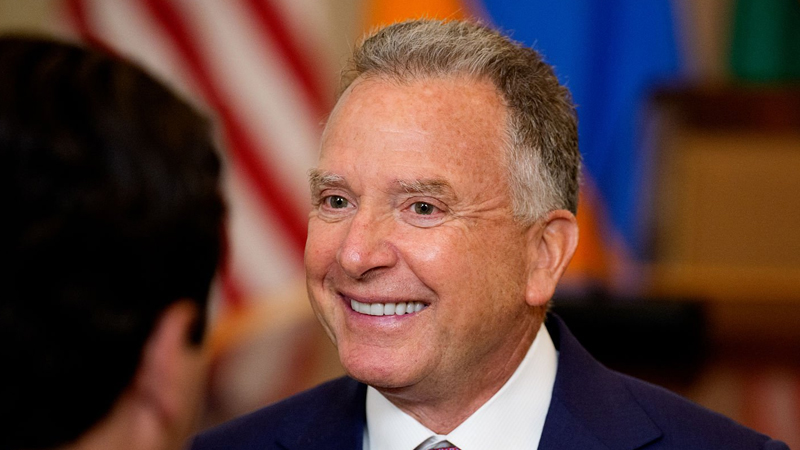
If there were awards for diplomatic fumbles, President Donald Trump’s special envoy to the Middle East might have just clinched one this week. On Wednesday, Special Envoy Witkoff sat down with Russian President Vladimir Putin for what was supposed to be a key moment in ongoing peace discussions.
Instead, according to German outlet Bild, things went sideways fast. Putin reportedly called for a “peaceful withdrawal” of Ukrainian forces from Kherson and Zaporizhzhia. Witkoff, however, misunderstood that as Putin offering to pull Russian troops from those areas. Cue the facepalms.
“Witkoff doesn’t know what he’s talking about,” an unnamed Ukrainian official told Bild. Following the meeting, Trump publicly floated the idea that Russia might pull back from those regions in exchange for control over Donetsk, The Wall Street Journal reported. But the next day, during a phone call between Witkoff, Vice President JD Vance, Secretary of State Marco Rubio, and European leaders, the confusion only deepened.
According to Bild, Witkoff said Russia would indeed withdraw from Kherson and Zaporizhzhia and “freeze the front line.” European officials on the call described him as “overwhelmed” and “incompetent.” The real kicker? Witkoff and Vance only wanted to brief Europe on the Trump team’s progress, while Rubio thought European allies should be more directly involved in the talks.
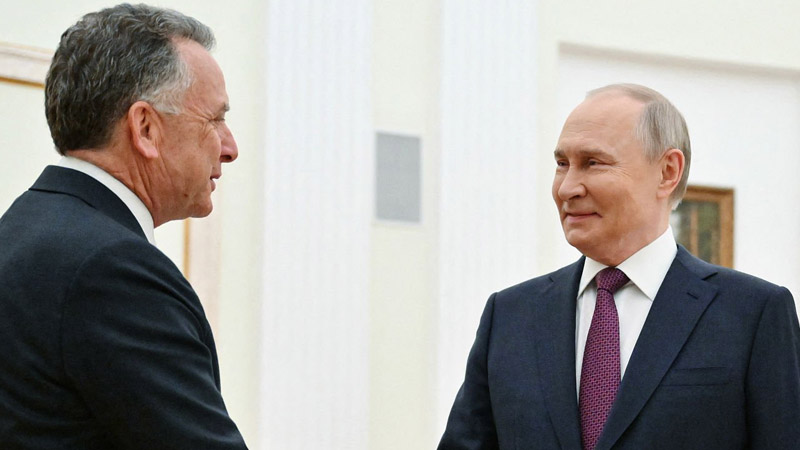
The misalignment left European leaders so uneasy that they demanded another call on Friday just to straighten things out. “This is deeply damaging incompetence,” former U.S. Ambassador to Russia Michael McFaul wrote on X. “Witkoff should finally start taking a note-taker from the U.S. embassy for future meetings.
That’s how professional diplomacy works.” The timing couldn’t be worse. Trump is set for his own high-profile meeting with Putin in Alaska on Friday, being billed as “historic,” where he’s expected to pitch controversial “territory swapping” ideas between Kiev and Moscow.
Trump’s Ambassador to NATO, Matthew Whitaker, tried to put guardrails around those proposals during a Sunday CNN interview, insisting that “no big chunks or sections are going to be just given that haven’t been fought for or earned on the battlefield.”
Still, Ukraine and European allies are pushing back hard. They insist any peace deal must safeguard Ukraine’s sovereignty, protect its security, and keep the door open for NATO membership. Meanwhile, Moscow isn’t budging from its maximalist stance: recognition of the territories it has already annexed and zero tolerance for Kiev joining NATO.
If Trump was hoping for smooth sailing into Friday’s showdown with Putin, this diplomatic misfire has churned up the waters. Instead of walking into Alaska with a united front, the U.S. and its allies are still trying to sort out exactly what was promised, to whom, and whether anyone can trust the message coming from Trump’s envoy.