
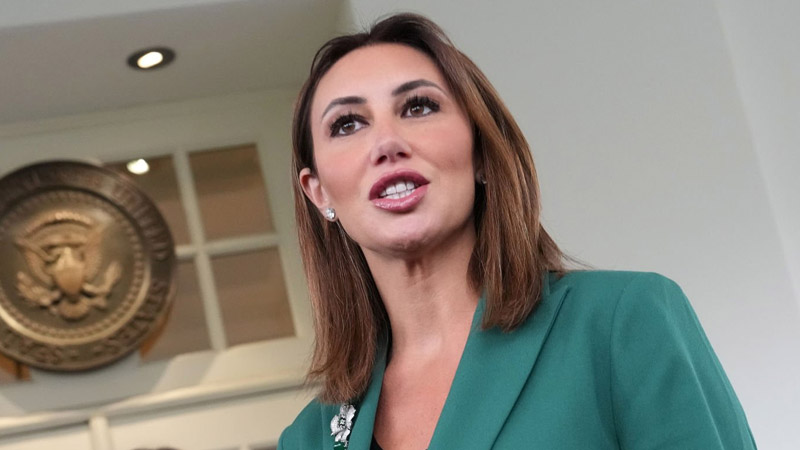
A federal judge has ruled that Alina Habba was working unlawfully as acting U.S. Attorney in New Jersey, casting uncertainty over the state’s legal system and the prosecutions handled under her watch.
“Faced with the question of whether Ms. Habba is lawfully performing the functions and duties of the office of the United States Attorney for the District of New Jersey, I conclude that she is not,” U.S. District Judge Matthew Brann of the Middle District of Pennsylvania wrote in a decision issued Thursday.
The ruling came after challenges were filed over Habba’s position, which the Trump administration had fought to preserve following her initial appointment as interim U.S. Attorney. Judge Brann determined that Habba had been serving without legal authority since July 1, warning that her actions during that period could be declared void.
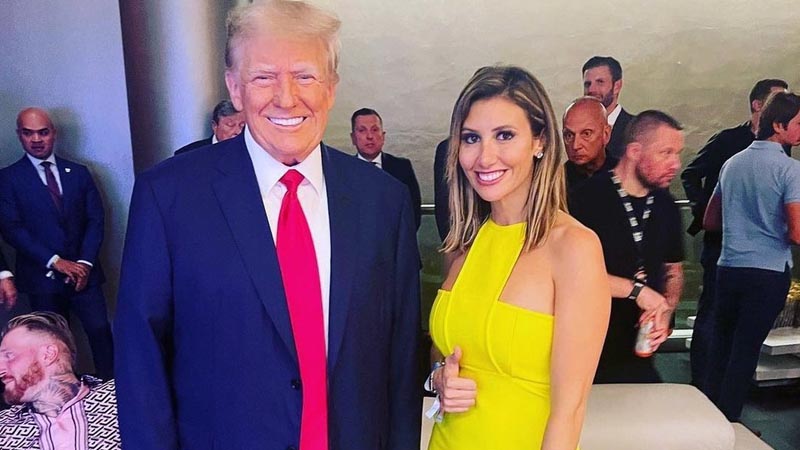
Brann, an Obama nominee, also barred Habba from involvement in prosecutions moving forward. “Because she is not currently qualified to exercise the functions and duties of the office in an acting capacity, she must be disqualified from participating in any ongoing cases,” Brann stated in his 77-page opinion.
The controversy intensified last month when a panel of federal judges refused to extend Habba’s interim tenure beyond 120 days, naming her deputy, Desiree Grace, as her successor. Attorney General Pam Bondi intervened, dismissed Grace, and kept Habba in the top role, sparking confusion across the U.S. Attorney’s office.
Legal challenges quickly followed, questioning the validity of Habba’s appointment. While Judge Brann ruled that her service was unauthorized, he stopped short of dismissing charges in cases tied to her authority. Instead, he cautioned that any prosecutor operating under Habba’s “supervision or authority” could be subject to disqualification.
The judge also placed a temporary hold on his ruling to allow the Justice Department to appeal and argue for Habba’s continued role.
Habba, 41, is a longtime ally of President Donald Trump, having served as his personal attorney in civil cases and acting as a spokesperson during his 2024 presidential campaign. In March, Trump appointed her as interim U.S. Attorney for New Jersey.
The decision has thrown ongoing prosecutions in the state into limbo, raising questions about the legitimacy of actions taken under Habba’s leadership. As the appeals process begins, the outcome will determine whether her tenure stands or whether the state’s federal prosecutions will require a reset under new leadership.