
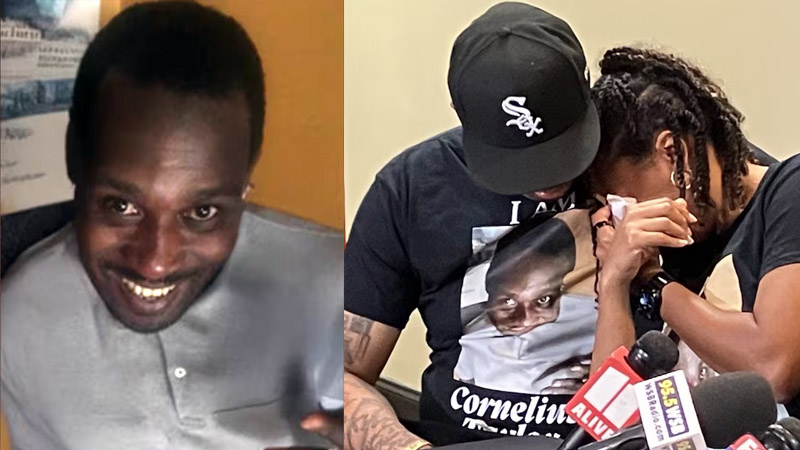
The family of Cornelius Taylor, a man who died after being struck by a city bulldozer during the clearing of a homeless encampment in Atlanta, has filed a civil lawsuit against the city. Taylor, 46, who was unhoused and living in the Old Fourth Ward neighborhood, was hit by an Atlanta Public Works truck while he was still inside his tent on January 16.
He was transported to the hospital, where he later died from his injuries. Representing Taylor’s family, attorneys from Davis Bozeman Law argue that Taylor was inside his tent when the bulldozer plowed through the encampment. The impact caused severe injuries, including fractures to his pelvis, lacerations to vital organs, and extensive internal bleeding.
The Fulton County medical examiner determined that Taylor’s death was due to blunt force trauma to his abdomen and pelvis and classified it as an accident. Six months after his death, Taylor’s family is suing the city of Atlanta, alleging negligence and the failure to check the tents in the encampment before clearing it. The lawsuit, filed on Friday, also names the individual driving the bulldozer as a defendant.
“You just say to yourself, ‘This is absolutely wrong, and there has to be a legal remedy,’” said attorney Harold Spence of Davis Bozeman Law. “If somebody looked inside – had taken 10 seconds to do so – this tragedy could have been averted. And if you don’t know what’s inside, you don’t crush it. What could be simpler than that?”
The lawsuit is framed not just as a pursuit of financial compensation but as a call for policy changes regarding the city’s handling of its homeless population. Taylor’s sister, Darlene Chaney, who is also a plaintiff in the case, emphasized that this legal action is about preventing future tragedies. “This isn’t about the lawsuit,” Chaney said. “It never was about the lawsuit. This is about trying to make sure this doesn’t happen again.”
Typically, suing government entities and their employees is difficult due to qualified immunity, a legal doctrine that shields them from lawsuits in many instances. However, attorneys representing Taylor’s family believe the clear neglect in this case provides a strong enough argument to bypass this protection.
“We tried to plead this lawsuit in a way to get around the immunities that we know the city might try to assert,” Spence stated. “A tent that was occupied by a human being was crushed by this heavy equipment. That’s obviously wrong.”
In response to inquiries, a spokesperson for the mayor’s office expressed sympathy for the incident but refrained from commenting on the pending litigation. “The incident involving Mr. Taylor was a tragedy; however, it would be inappropriate to comment on any potential pending litigation,” the spokesperson said.
On July 10, the city closed the Old Wheat Street encampment. Many residents of the camp were offered housing at Welcome House, a low-income facility providing transitional and long-term support services.