
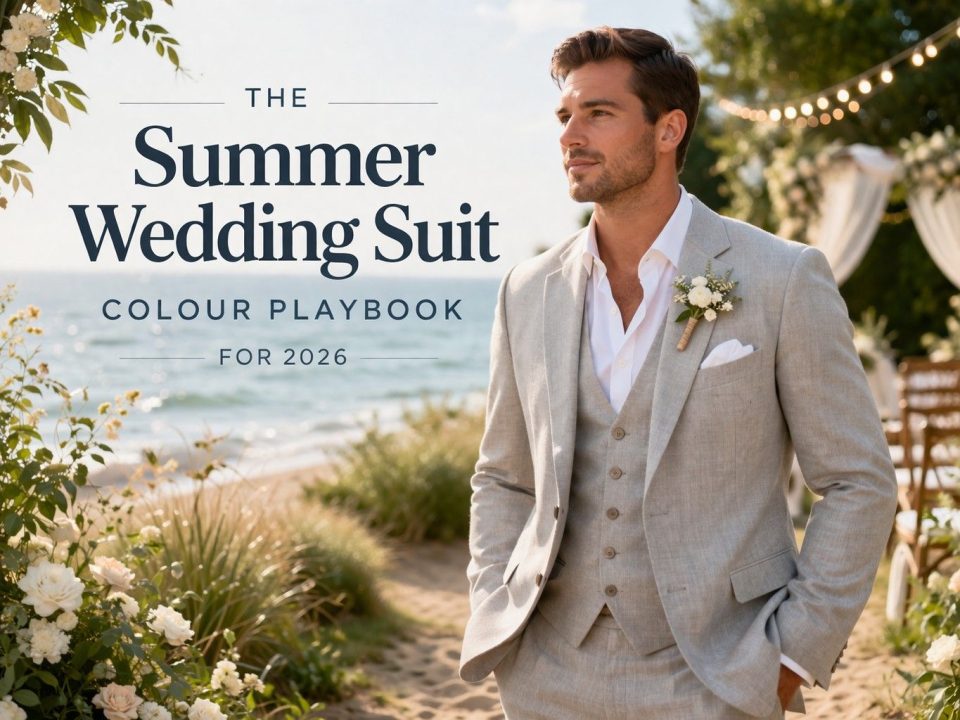
1. Why Summer Wedding Suits Are a Different Beast
Not all wedding suits are built equal. A dark charcoal suit that looks magnificent at a December black-tie affair will turn into a portable sauna the moment you step into the afternoon sun at an outdoor summer ceremony. The challenge isn’t just aesthetics — it’s thermodynamics.
Summer weddings typically happen between May and September, often outdoors, in natural light, with ceremonies that can last hours. The right summer suit needs to solve three problems simultaneously: staying cool, looking sharp in photographs, and remaining formal enough for the occasion.
Here’s what competitors’ guides often gloss over: humidity matters as much as temperature. A 28°C day in a dry coastal breeze is very different from 28°C at a humid garden wedding. We’ll account for both throughout this guide.
2. The Fabric Truth: What Actually Keeps You Cool
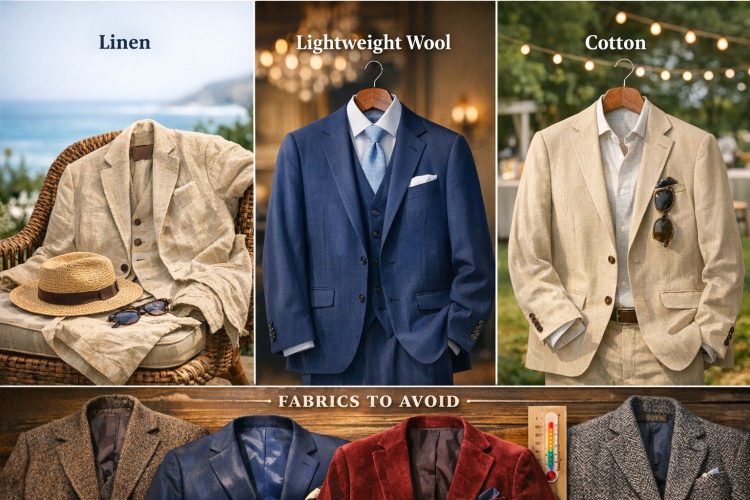
Fabric choice is the single most impactful decision you’ll make for a summer suit. Every fabric has a different moisture management profile, structure retention level, and wrinkle behavior—and most guides treat them as interchangeable. They aren’t.
Linen — The Summer Icon (With a Caveat)
Linen is the gold standard of hot-weather fabrics for a reason. It’s made from flax fibres that are naturally hollow, making it incredibly breathable and moisture-wicking. A pure linen suit will keep you noticeably cooler than any other option.
The catch? Pure linen creases aggressively. Within two hours of wearing it, especially while seated at a ceremony, you’ll look like you slept in it. For garden parties and relaxed beach weddings, that’s part of the charm. For a formal hotel ceremony, it can look sloppy.
💡 Pro Tip: Opt for a linen-wool or linen-cotton blend (55% linen minimum). You get 80% of the breathability with dramatically better crease resistance. It’s the upgrade most guides never mention.
Lightweight Wool — The Surprising Best-All-Rounder
This surprises people, but high-thread-count lightweight wool—specifically Super 100s to Super 150s tropical wool — is an exceptional choice for summer weddings. Wool is a natural fiber that regulates temperature bidirectionally: it keeps you warmer when you’re cold and cooler when you’re warm. It also manages moisture well and holds its structure for the entire day.
Unlike linen, a well-cut lightweight wool suit will still look pressed and sharp at 7 PM after a full day of celebration. It’s the groom’s best friend for formal summer ceremonies.
Cotton — The Casual Comfort Pick
Cotton suits are soft, lightweight, and comfortable — but they lack the structure that formal weddings demand. They’re perfect for relaxed daytime occasions, garden parties, or semi-formal settings. Cotton doesn’t drape as elegantly as wool or even linen blends, and it can also wrinkle significantly under pressure.
💡 Pro Tip: Cotton-linen blends (sometimes called ‘summer cotton’) are a step up. They balance the softness of cotton with linen’s breathability.
Fabrics to Avoid in Summer
- Heavy wool (anything below Super 100s) retains heat
- Polyester—doesn’t breathe, traps sweat, shines under flash photography
- Velvet — beautiful but brutal above 20°C
- Thick tweed or herringbone—reserved for autumn and winter only
3. The Summer Wedding Suit Colour Playbook for 2026
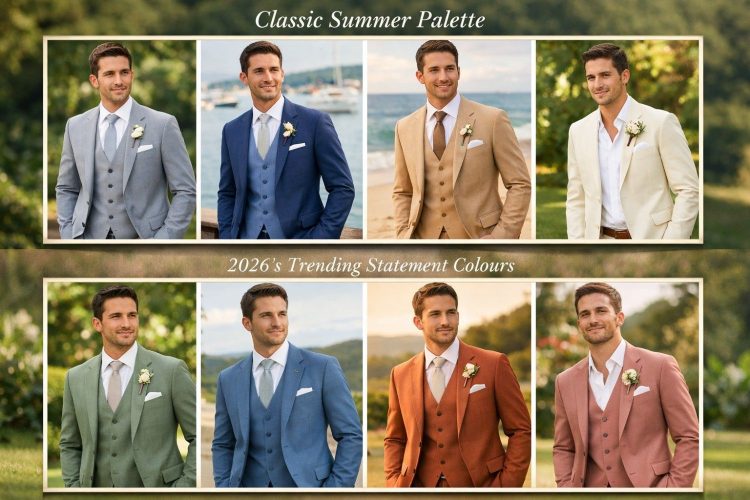
Color is where summer weddings get genuinely exciting. The safe navy-and-charcoal formula that dominates winter weddings gives way to a much more expressive palette — and 2026 is seeing grooms push this further than ever.
The Classic Summer Palette
Light Grey — The most versatile summer wedding colour. It reads as modern and fresh, photographs beautifully in natural light, and pairs with virtually every shirt and tie combination. Light grey is the summer equivalent of navy: reliable and elegant without being predictable.
Navy Blue — A perennial favorite because it bridges formality and warmth. In summer contexts, choose a lighter navy (avoid midnight blue in daylight) and pair with tan or white accessories to prevent the suit from reading as too heavy.
Beige & Tan — Perfect for outdoor ceremonies, beach weddings, and destination celebrations. These earthy neutrals harmonise beautifully with natural settings and work especially well with brown leather shoes and warm-toned accessories.
Ivory & Off-White — Increasingly popular for grooms in 2026, particularly for tropical and destination weddings. Bold, distinct, and memorable — but ensure the photographer has experience shooting light-on-light to avoid washing out.
2026’s Trending Statement Colours
The data is clear: grooms in 2026 are moving decisively away from safe defaults. Here’s what’s gaining serious traction:
- Sage Green — Nature-inspired, works brilliantly in garden and vineyard settings
- Dusty Blue — The softer cousin of navy; fresh without being casual
- Terracotta — Earthy warmth that photographs exceptionally in golden-hour light
- Soft Camel / Sand — A bolder take on beige, often used for destination weddings
- Dusty Rose — Yes, grooms are wearing it — and looking incredible doing so
💡 Color Rule: For daytime summer ceremonies, avoid anything darker than medium navy as a base. Rich burgundy, forest green, and charcoal read more naturally in cooler months. If you love bold color, use it in your accessories—pocket square, tie, boutonniere—rather than the suit itself.
Coordinating with the Wedding Palette
Your suit doesn’t exist in isolation. Before you commit to a color, factor in the bride’s dress tone (warm ivory vs. cool white changes everything), the bridesmaids’ colors, the venue’s background colors, and the season’s natural lighting.
A quick hack: photograph fabric swatches next to your partner’s dress fabric under natural daylight. What looks right under shop lighting often clashes in outdoor photography.
4. Suit Styles & Silhouettes: Which Cut Works Where
The cut of your suit shapes your entire silhouette — and in summer, it also affects how comfortably you move and breathe. Here are the four core silhouettes and when to choose each.
Slim Fit
Slim fit suits have a tapered waist and close-fitting arms and legs. They look sharp in photographs and work well for lean builds. In summer, the close fit can feel restricting — especially in humidity. Best for: formal indoor summer weddings or controlled environments with air conditioning.
Tailored (Modern) Fit
The sweet spot. A tailored fit sits between slim and regular — it skims the body without hugging it. You get a clean, structured silhouette with enough room to breathe and move freely. Best for: almost every summer wedding scenario. This is the recommended default.
Regular / Classic Fit
More room through the chest, waist, and leg. Traditional and comfortable, but can look boxy on slimmer builds. Works well for informal or rustic summer weddings where comfort is prioritised. Best for: barn weddings, casual outdoor ceremonies, or guests who prioritise comfort.
Relaxed / Unstructured
Unstructured suits have minimal or no canvas lining, which makes them significantly lighter and more flexible. They look deliberately relaxed — a very modern aesthetic that works brilliantly for beach and destination weddings. Best for: beachside ceremonies, destination weddings, or very casual outdoor settings.
5. Two-Piece vs. Three-Piece: A Hot-Weather Decision
Most summer style guides tell you to simply ‘opt for a two-piece’ and move on. That’s lazy advice. The truth is more nuanced, and the right choice depends heavily on your role and the formality of the ceremony.
Two-Piece in Summer: The Default for Good Reason
A jacket and trousers without a waistcoat is the lightest, most breathable configuration. It works for both grooms and guests at most summer weddings. If you’re outdoors for extended periods, this is the practical choice.
Three-Piece Strategy: When It Works
A three-piece suit (with waistcoat) looks exceptional in wedding photography and conveys a higher level of formality. Many experienced grooms use the following strategy: wear all three pieces for the ceremony and formal photographs, then remove the jacket at the reception, leaving the waistcoat as a polished middle layer.
💡 Groom’s Strategy: Choose a lighter waistcoat fabric — ideally the same lightweight wool or linen-blend as the suit. Avoid thick canvas waistcoats in summer; they defeat the purpose.
For guests, three-piece suits at summer weddings can read as overdressed unless the invitation explicitly calls for black tie or very formal attire. When in doubt, the two-piece with a quality tie keeps you well within the right register.
6. Venue-by-Venue Style Guide
This is the section most competitor guides skip entirely — and it’s where real decisions get made. The venue doesn’t just inform the dress code; it affects fabric choice, colour, footwear, and even how structured your suit should be.
🏖️ Beach Wedding
Suit: Linen or linen-cotton blend. Unstructured silhouette. Light beige, ivory, or sand colour.
Shirt: White or chambray linen shirt. Open collar or minimal tie (bow tie works).
Shoes: Suede loafers, leather sandals, or even barefoot if the ceremony is on sand. Avoid leather oxfords — they look out of place and will be ruined.
Avoid: Dark colours, heavy fabrics, anything with canvas or full lining.
🌿 Garden / Outdoor Wedding
Suit: Lightweight wool or linen blend. Tailored or relaxed fit. Light grey, sage green, or navy.
Shirt: White or pale blue dress shirt. Tie optional, depending on formality.
Shoes: Derby shoes or loafers in tan or light brown leather. Avoid extremely shiny shoes that attract attention to grass stains.
Avoid: Mud-trap trouser hems (go for a slight break or no break), very light trousers if the ground is soft.
🏰 Formal Hotel / Ballroom
Suit: Lightweight wool (Super 120s+). Tailored or slim fit. Navy, light grey, or muted statement colour.
Shirt: Crisp white dress shirt with French cuffs for grooms. Silk or cotton poplin.
Shoes: Oxford or Derby in black or dark brown.
Note: Hotel venues often have air conditioning — factor this into fabric weight. You may be able to go slightly heavier than pure outdoor summer logic suggests.
🌾 Barn / Rustic Wedding
Suit: Tweed-look lightweight blends, check patterns, or earth tones. Regular or relaxed fit.
Shirt: Chambray, cotton, or linen. Brown or rust tie. Open collar acceptable.
Shoes: Chelsea boots, brogue oxfords, or suede loafers. Brown leather is king here.
Avoid: Patent leather or highly polished black shoes — they clash with the rustic aesthetic.
🌴 Destination Wedding
Suit: Linen or tropical wool blend. Very light or bright colours. Unstructured construction.
Note: Pack and carry-on your suit — checked luggage and formal suits do not mix well. Use a quality suit carrier and steamable fabrics that travel well.
7. Summer Wedding Suits for Guests: The Full Breakdown
Being a wedding guest has its own dress code calculus. You want to look your best without outshining the wedding party — and that balance shifts in summer when the instinct is to dress down for the heat.
Reading the Dress Code
Black Tie: Even in summer, black tie means black tie. A lightweight wool tuxedo or black dinner suit is appropriate. Opt for a lighter wool weight and ensure the venue is climate-controlled.
Formal / Black Tie Optional: A dark navy or charcoal tailored suit. Quality shirt and tie. Pocket square. This is not the occasion for linen casualness.
Semi-Formal / Cocktail: Your widest range of expression. A light grey, navy, or statement colour in a tailored fit. Tie or no tie is acceptable.
Smart Casual: A blazer with tailored trousers (they don’t need to match). Chinos in tan or grey with a linen sports coat. No tie required.
Garden Party / Casual: Linen trousers with a linen shirt or casual blazer. Relaxed but still considered.
The Guest’s Cardinal Rules
- Never wear white or ivory — those belong to the couple
- Avoid matching the bridesmaids’ colours unless specifically invited to do so
- When in doubt, go one level more formal than you think necessary
- Bring a layer for evening — outdoor summer evenings get cold surprisingly fast
8. Groomsmen Coordination Without Matching Everyone
The era of everyone wearing identical suits is giving way to a more sophisticated approach: coordinated variety. In 2026, the most photographed wedding parties use the following strategies:
Strategy 1: Same Suit, Different Accessories
All groomsmen wear an identical suit. The groom differentiates through his tie, pocket square, boutonniere, and sometimes a waistcoat. Simple, clean, and effective.
Strategy 2: Same Colour, Different Shades
Groomsmen wear suits in the same colour family but different shades — for example, medium blue, steel blue, and navy. The group reads as cohesive while individuals look distinct. Works especially well for large wedding parties.
Strategy 3: Same Trousers, Different Jacket
Groomsmen share matching trousers but wear different blazer styles. This gives each person personality while keeping visual harmony at ground level.
💡 Photography Tip: Brief your photographer on the coordination strategy beforehand. What looks intentionally varied in person can look mismatched in a quick snapshot. Good photographers adjust their framing accordingly.
9. Accessories That Survive the Heat
Accessories are where a good summer suit becomes a great summer look — but summer imposes some practical constraints that winter dressing doesn’t have.
Ties
In summer, lighter tie fabrics work better than heavy silk. Linen ties, cotton ties, and lightweight knit ties all feel appropriate and don’t wilt in heat the way thick jacquard silk can. For very casual outdoor ceremonies, a tie isn’t always required — but carry one just in case.
Pocket Squares
The pocket square is the most impactful single accessory in warm-weather suiting. A white linen pocket square with a simple fold keeps things crisp and classic. For statement looks, a patterned silk square adds personality without adding heat.
Boutonnieres
Choose flowers that can withstand heat without wilting rapidly. Succulents, spray roses, and dried botanicals are more heat-resilient than delicate blooms like peonies or sweet peas. Discuss this with your florist specifically for summer.
Shoes
Leather shoes are always appropriate for suits, but in summer suede provides a softer, lighter aesthetic that pairs beautifully with warm-weather colours. Light brown, tan, and cognac suede loafers or Derbies are excellent choices for all but the most formal summer settings.
Socks
Consider no-show or very low socks with loafers for truly casual outdoor summer settings. For formal ceremonies, stick with matching or complementary socks — avoid white athletic socks with dress shoes at all costs.