
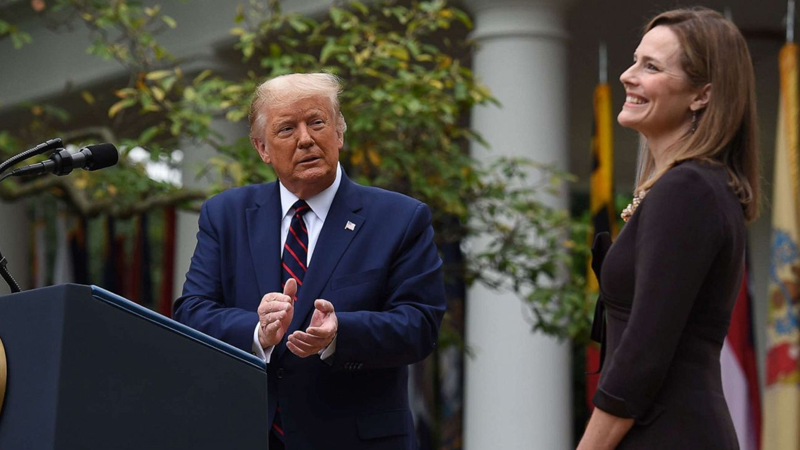
The Supreme Court appeared deeply skeptical this week of President Donald Trump’s argument that he had sweeping authority to impose emergency tariffs under a decades-old national security law. Even one of Trump’s own conservative appointees joined in questioning whether his interpretation of executive power stretched too far.
At the center of the dispute is the International Emergency Economic Powers Act (IEEPA), a law enacted in 1977 that, as appellate judges noted, “doesn’t mention the word tariffs.” In fifty years, it has never been used to justify tariff measures. The cases before the court were brought by wine and spirits importer V.O.S. Selections, Inc. and Learning Resources, Inc., both challenging Trump’s trade deficit tariffs as unconstitutional.
Arguing for the government, U.S. Solicitor General D. John Sauer defended Trump’s decision, describing “exploding trade deficits” that brought the nation “to the brink of an economic and national security catastrophe.” He insisted that the “major questions doctrine,” which limits broad agency actions without explicit congressional authorization, did not apply.
Justice Clarence Thomas immediately pressed Sauer on why the doctrine should not apply. Sauer replied that “common sense” dictated that Congress intended to grant the president broad powers to respond to emergencies through IEEPA. Other justices, however, were unconvinced.
Justice Elena Kagan reminded Sauer that “the power to tax belongs to Congress.” He countered that Trump was not asserting a “power to tax,” but rather a “power to regulate foreign commerce.” Justice Sonia Sotomayor rejected that distinction. “It’s a congressional power, not a presidential power, to tax. And you want to say tariffs are not taxes, but that’s exactly what they are,” she said.
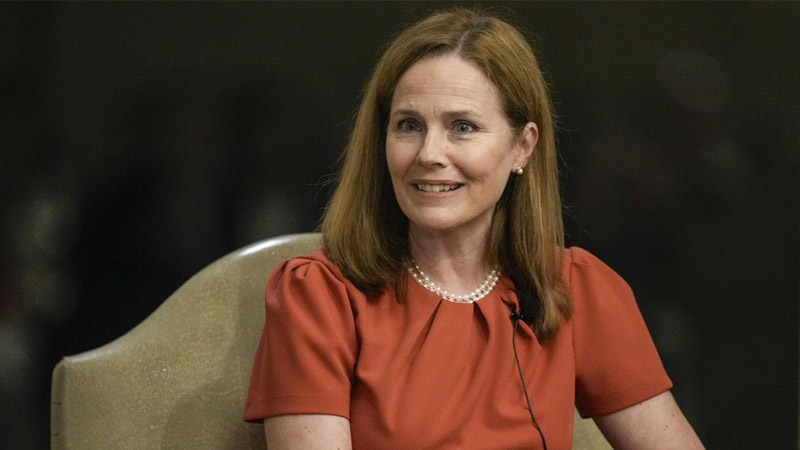
Justice Amy Coney Barrett also expressed doubt, asking Sauer whether there was any precedent for using the phrase “regulate importation” to authorize tariff authority. He cited the Trading with the Enemy Act of 1917 and the 1975 Yoshida case, which upheld temporary import duties during an emergency. Barrett noted that those examples fell short of proving a clear legal foundation for Trump’s claim.
Chief Justice John Roberts returned to the core issue, saying the major questions doctrine seemed “directly applicable.” He pointed out that IEEPA “had never been used before to justify tariffs,” suggesting Trump’s use of it represented a “misfit.”
On the eve of the hearing, Trump warned on social media that a ruling against him would be “literally, LIFE OR DEATH for our Country.”
Representing the challengers, attorney Neal Katyal summed up the opposing view: “May it please the court: Tariffs are taxes.” He argued that IEEPA “doesn’t come close” to giving any president “unlimited power to set tariffs on all goods imported from all our trading partners.”