
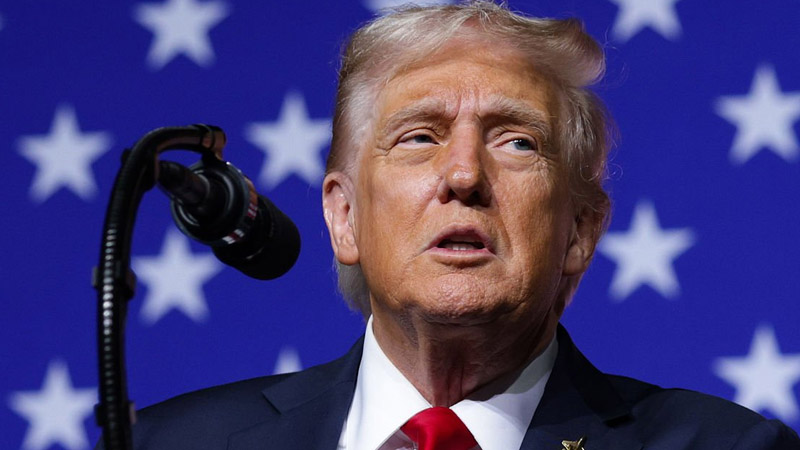
President Donald Trump’s recent address to military leaders has drawn sharp criticism from a former senior national security official, who described the remarks as the most troubling speech of Trump’s presidency to date.
Ben Rhodes, who served as deputy national security advisor under President Barack Obama, discussed Trump’s Tuesday remarks with Tommy Veitor, co-host of the political podcast Pod Save America. Rhodes said the speech, in which Trump suggested the armed forces could use violence to control civil disturbances in the United States, raised deep concerns.
I found this to be one of the most unsettling Trump speeches I’ve ever seen,” Rhodes said. “This is like a 10 out of 10 on the blinking red light.”
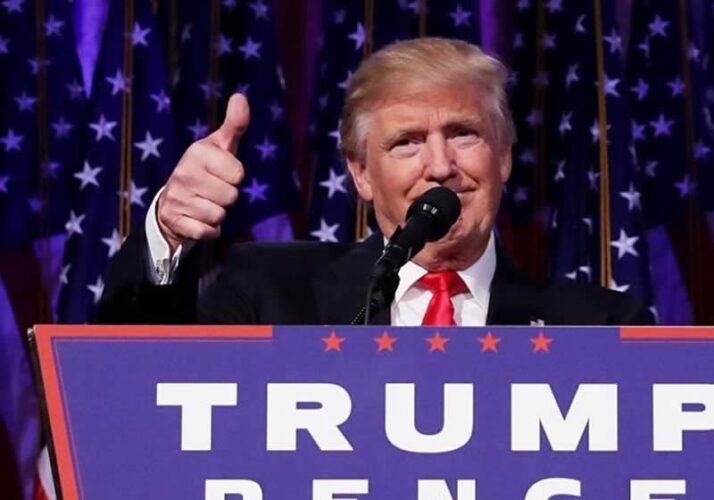
The address, delivered without a clear explanation or policy context, left many puzzled. Trump’s rhetoric included appeals that critics saw as testing the boundaries of presidential authority and the role of the military in domestic affairs.
“Beyond how bizarre and unprecedented and unusual it is, in part because there was no explanation why, I think we all anticipated [Pete] Hegseth giving this kind of performative speech that he did today,” Rhodes said. “But the reason I was unsettled when I first saw it is that I was afraid that this would happen.”
Rhodes emphasized that his concern stemmed not only from the tone of the speech but also from what it could signal about Trump’s willingness to involve the military in political and civil matters. He compared the tactics to authoritarian strategies he has observed globally.
“One of my fears from the beginning has been, if you look at the authoritarian playbook, Trump is running all the plays about the media, about the opposition, about the law firms, about the universities, about dissent,” Rhodes continued. “But really, the absolute last third rail, the absolute scariest thing is when the US military, the most powerful institution in the world, is suddenly introduced to this.”
The remarks drew widespread attention because of the potential implications for civil-military relations in the United States. Critics warn that framing the armed forces as a tool for domestic control risks undermining democratic norms and constitutional boundaries.
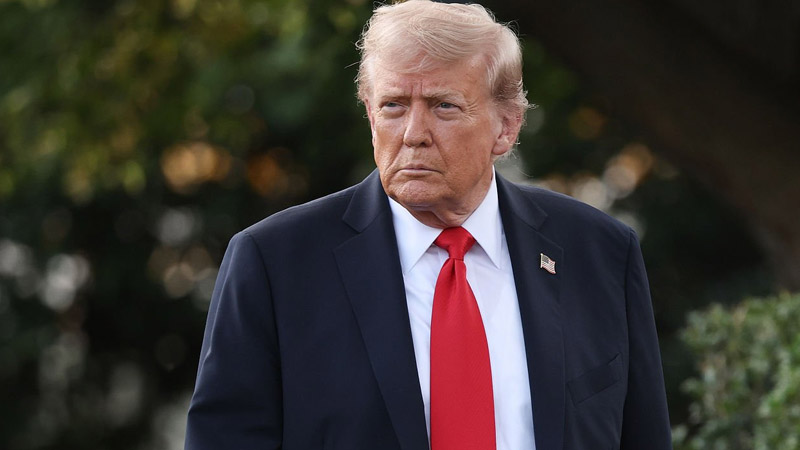
For Rhodes, the concern is not hypothetical. His reaction reflects fears that Trump’s language is part of a broader strategy to test the limits of institutional resistance. His warning points to the dangers of politicizing the nation’s armed forces, an institution traditionally seen as independent of partisan conflict.
As Trump continues to frame himself as a leader willing to confront opponents directly, his speech to military leaders may stand as a defining moment in how both supporters and critics interpret the reach of presidential power.