
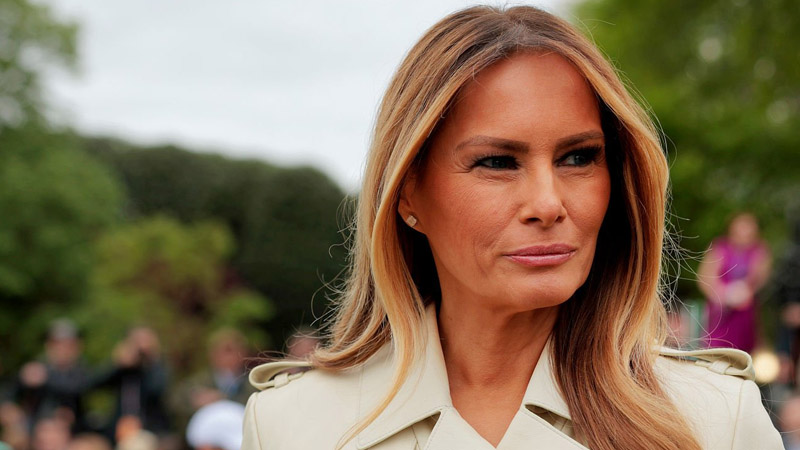
First Lady Melania Trump has announced the Presidential AI Challenge, a new nationwide competition for students in grades K-12 that encourages children to learn about generative artificial intelligence while solving real-world community issues.
The contest, which also allows educators to participate if they meet eligibility requirements, asks students to design AI-driven solutions tailored to their communities. The scope and complexity of projects will vary depending on grade level.
Registration is now open. All projects must be submitted by January 20, 2026, at 11:59 p.m. local time. State champions will be announced in March, and national finals will be held in Washington, D.C., from June 7 to 10, 2026. Participants will also gain access to mentorship opportunities, office hours, and informational sessions to help guide their work.
The initiative offers a range of incentives. Regional winners will receive invitations to a three-day showcase in Washington, while state champions will be awarded Presidential Certificates of Achievement. National winners will be eligible for prizes up to $10,000, awarded per group for elementary students and per individual for older students.
In addition, corporate partners are providing cloud credits and technical resources to encourage youth participation in AI development. “Just as America once led the world into the skies, we are poised to lead again, this time in the age of AI,” Melania Trump said in a video posted to X.
The competition builds on President Donald Trump’s executive order Advancing Artificial Intelligence (AI) Education for American Youth, which was signed five months ago. According to the challenge website, the order aims to maintain “America’s global dominance in this technological revolution for future generations.”
Beyond fostering AI literacy, the contest is intended to help prepare students for a labor market rapidly shaped by artificial intelligence. Studies suggest AI-related skills are among the most sought-after and highly compensated in the job market. At the same time, experts warn that generative AI could reshape or eliminate certain entry-level positions, making advanced training and knowledge especially valuable.
By exposing students to AI technology at an early stage, the challenge seeks to build a foundation for a future workforce ready to compete on the global stage. The White House has framed the initiative as both an educational opportunity and a long-term investment in U.S. economic leadership.
For now, young innovators across the country will have the chance to showcase their ideas while shaping how America adapts to the promises and challenges of a rapidly changing digital age.