
Florida’s controversial new immigration detention center deep in the Everglades is already sparking intense debate—depending on who you ask, it’s either a clean, secure facility or a bug-infested nightmare that should be shut down immediately.
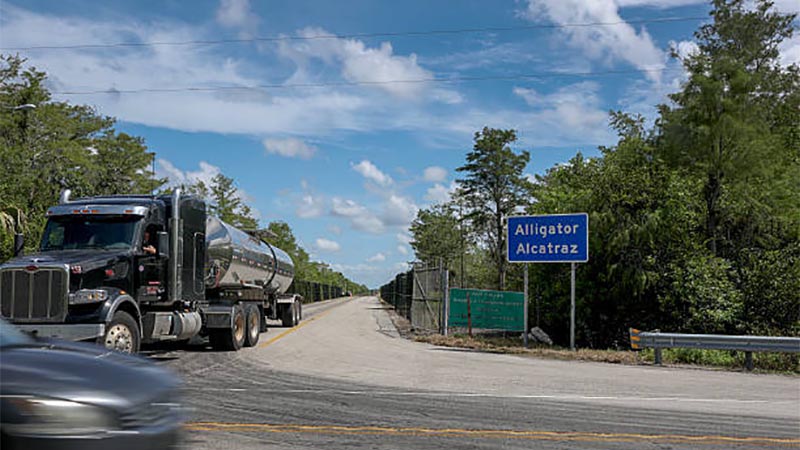
This weekend, a large group of lawmakers from both parties toured the recently opened 3,000-bed facility, which sits on a remote airstrip surrounded by swampland. The detention center has earned the nickname “Alligator Alcatraz” because of its isolated location, and Saturday’s visit brought plenty of heat from both sides of the aisle.
Democrats didn’t hold back after seeing the inside. U.S. Rep. Debbie Wasserman Schultz, a Florida Democrat, came out swinging. “There are really disturbing, vile conditions and this place needs to be shut the hell down,” she said. “This place is a stunt, and they’re abusing human beings here.”
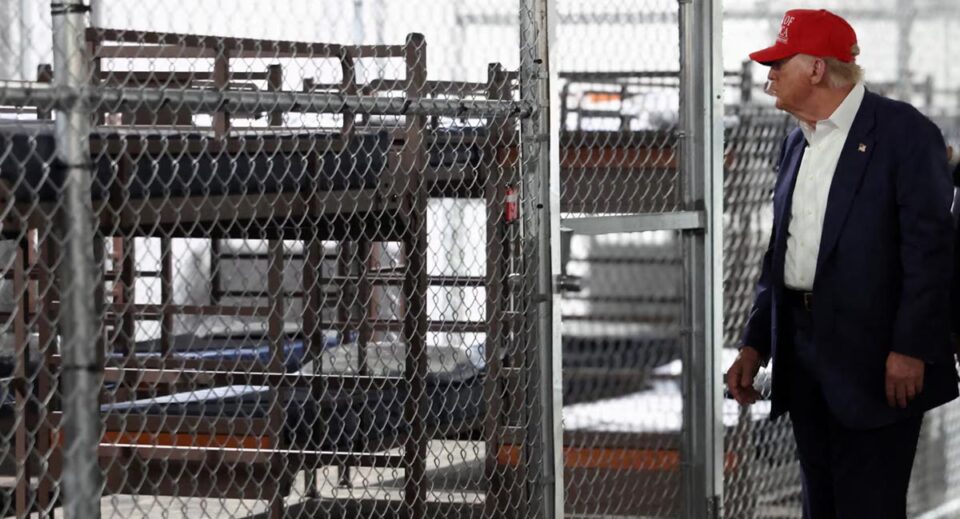
Wasserman Schultz and other Democratic lawmakers described the facility as overcrowded and unsanitary. They reported cage-style units with 32 men sharing just three combined toilet-sink fixtures. They also measured high indoor temperatures—83 degrees in one housing area and 85 in the medical intake section. Grasshoppers and other bugs were reportedly everywhere.
Although lawmakers weren’t allowed to speak directly with detainees, Rep. Maxwell Alejandro Frost, also a Democrat, said one man yelled out “I’m an American citizen!” as their group walked by. Others were heard chanting “Libertad,” the Spanish word for freedom.
But not everyone saw the same thing. Republican lawmakers on the tour strongly disagreed with their Democratic colleagues’ account. State Sen. Blaise Ingoglia said he was in the same group as Wasserman Schultz and called the claims exaggerated. “The rhetoric coming out of the Democrats does not match the reality,” he said.
Ingoglia described the facility as safe, well-managed, and air-conditioned. He acknowledged that a few detainees became “a little raucous” when the delegation passed through, but said he couldn’t hear what they were saying.
Republican state Sen. Jay Collins, who was in a separate group, also pushed back against the idea that the facility was in poor condition. “No squalor,” he said, adding that what he saw looked orderly and functional. Collins mentioned backup power generators, a system to track dietary needs, and sturdy military-style bunks. The sanitation setups may have been minimal, but he felt they were reasonable.
“Would I want that toilet-and-sink combination at my bathroom at the house? Probably not, but this is a transitional holding facility,” Collins said in a phone interview.
Journalists weren’t allowed to join the tour, and lawmakers had to leave their phones and cameras behind. The lack of media access has only intensified the divide in public perception, with no independent visuals to back up either account.
So far, the state has not responded directly to the criticism, but with such wildly conflicting descriptions from elected officials, the debate over what’s really happening at the Everglades detention center is only just getting started.