
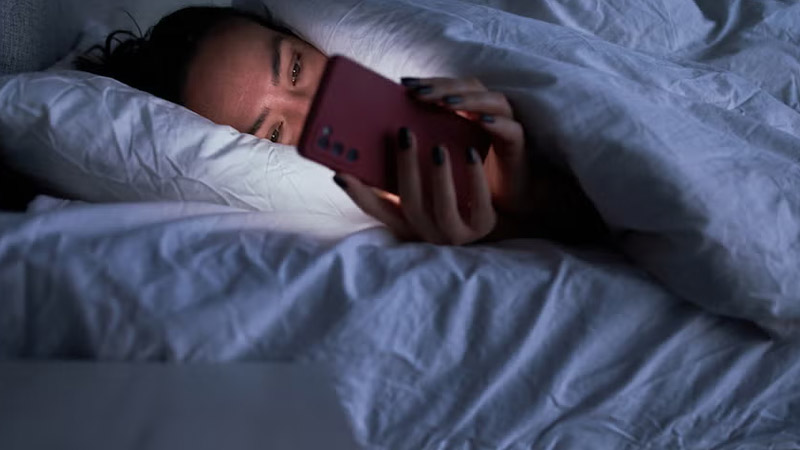
A leading neuroscientist has issued a warning about a leisure activity many people believe helps them relax — insisting it may actually be depleting their mental energy. Dr. Wendy Suzuki, Professor of Neural Science and Psychology at New York University, has spent years studying brain health.
In a recent Instagram video to her 158,000 followers, she challenged the notion that scrolling through social media or streaming shows is a form of mental downtime. “TikTok is not a brain break, it is actually a brain trap,” Dr. Suzuki said. “Here is the myth that watching videos or streaming shows gives your brain time to recharge. Here is the reality.
These platforms overload your attention system and keep the brain in reactive mode. True brain recovery happens when the default mode network kicks in during quiet reflective moments. Not constant input. That is why you feel drained after ‘resting.’”
Her comments align with earlier research from King Saud University in Saudi Arabia, which examined the smartphone habits of 435 adults between January and July 2016. The study looked at usage frequency, purpose, and duration, especially before bedtime.
The results were troubling for heavy smartphone users. While 41.7 percent of participants reported poor sleep quality, the risk nearly doubled for those using their devices for 16 to 30 minutes before bed. It increased more than threefold for people using their phones for 31 to 45 minutes at night.
“Our findings suggest that employees who use their smartphones more at bedtime have more risk of being poor sleepers,” the researchers wrote. “More attention should be drawn to the misuse of smartphones and their effect on sleep quality, health, and productivity of adults.”
Although the authors noted the study was “cross-sectional,” meaning it couldn’t prove that phone use directly caused poor sleep, they highlighted a consistent pattern. Other experts have suggested a causal link may exist, warning that morning phone use could have similar negative effects.
In another Instagram video, Dr. Suzuki offered advice for starting the day without a screen. “If your first move in the morning is checking your phone, your brain misses out on its most powerful window of the day,” she said. “Dopamine and cortisol are naturally high, giving you a boost in motivation, creativity, and focus. But screens hijack that potential.”
Her suggestion: delay screen time by 20 minutes. “Stretch. Write down three things you want to focus on. Or just sit with your coffee and your thoughts,” she said. “Watch what happens when you give your brain space to lead.”