

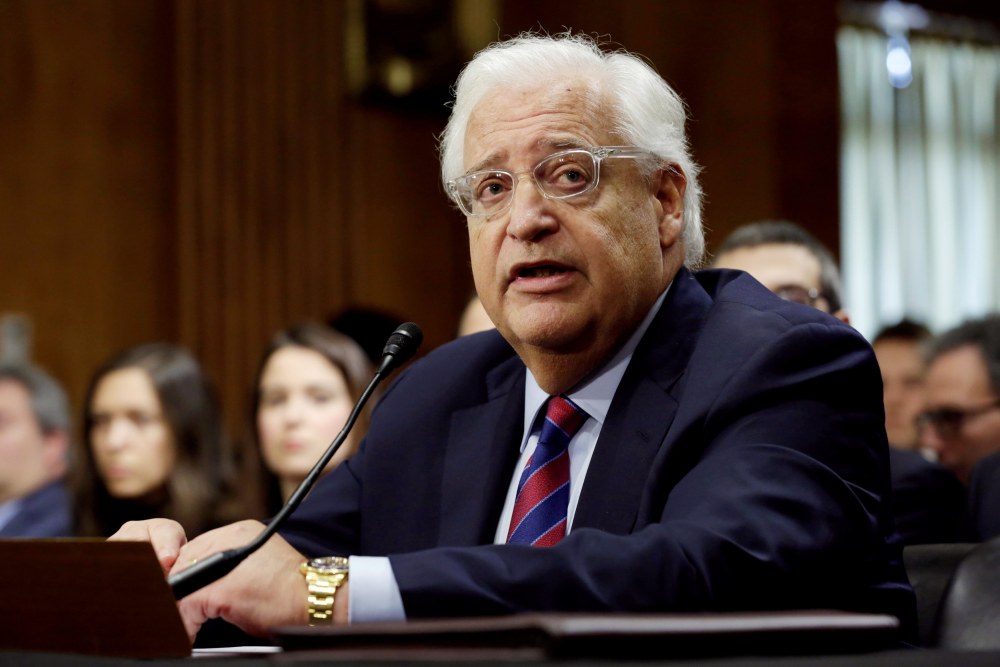
David Friedman, a close ally of U.S. President Donald Trump and his former ambassador to Israel, has been appointed as the new chief executive officer of NSO Group, the Israeli technology company behind the infamous Pegasus spyware. The company has faced intense global scrutiny for allegedly enabling surveillance on journalists, political activists, and human rights defenders.
Friedman, once Trump’s bankruptcy lawyer, steps into the role during a major transition for NSO Group. The company is being taken over by an American investment group that includes Hollywood producer Robert Simonds, head of STX Entertainment. This development has sparked renewed debate about the company’s direction and its history of controversial operations.
Pegasus, NSO Group’s flagship spyware, gained worldwide attention after reports revealed its use in targeting political dissidents, human rights advocates, journalists, and even U.S. government officials. The Wall Street Journal previously reported that Pegasus allowed clients to “spy on political dissidents, human-rights advocates, journalists and American officials,” raising serious ethical and security concerns.
John Scott-Railton, a senior researcher at Citizen Lab who has long studied Pegasus, issued a strong warning following the announcement of Friedman’s appointment. “They’re trying to push Pegasus spyware to America,” he wrote on Bluesky. “Your rights and freedoms are in danger.”
Scott-Railton elaborated further on the risks associated with NSO Group’s activities. “Most people know that Pegasus spyware has a mountain of abuse cases around the globe,” he said. “But for [about] a decade, NSO has also profited from enabling foreign governments to hack American citizens’ phones. And US officials.”
He also referenced prior U.S. government concerns about the company’s conduct. “Even in Trump 1, the admin was concerned about Pegasus proliferation,” he continued. “And in 2021, with a clear-eyed assessment that NSO was harming US national security and foreign policy objectives. What followed? Entity listing, visa bans, and an executive order on spyware. Plus congressional action.”
Scott-Railton ended with a sharp critique of the company’s reputation. “I believe NSO does not change,” he said. “They’ve churned through countless lobbyists to persuade you that they are turning over a new leaf. But in the end, it’s always the same story. Activists, elections, politicians, and dissidents are getting their lives turned upside down.”
As Friedman assumes leadership, questions remain about whether NSO Group will shift its practices or continue to face backlash over Pegasus. The appointment of a politically connected figure like Friedman suggests that the company may be seeking to improve its standing in Washington, but skepticism remains high among watchdogs and privacy advocates.