
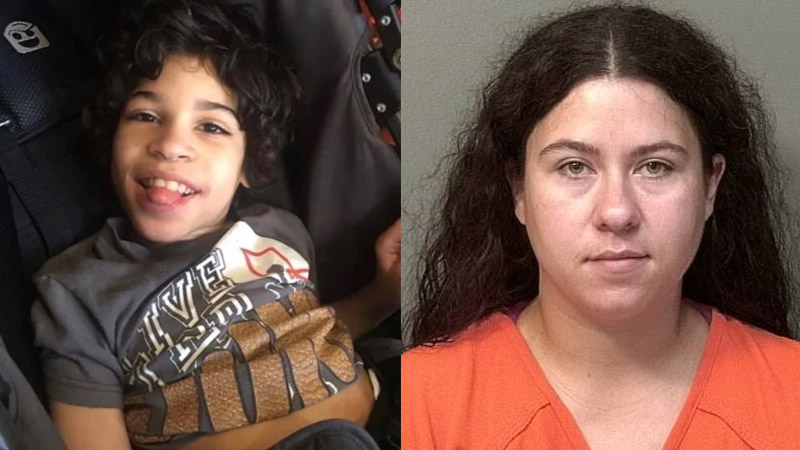
Opening arguments began Tuesday in the case of Cheyenne Maddox, the Tennessee mother accused in the 2022 death of her 13-year-old son, Kadaris Maddox. Prosecutors allege the boy died of starvation after suffering from severe malnutrition.
According to the prosecution, Kadaris weighed just 35 pounds at the time of his death, a drastic drop from the 47 pounds recorded during his last medical visit. Assistant District Attorney Mary O’Connor told the jury, “He died of malnutrition and he died of starvation… It was almost as if his skin was wrapped around his bones.”
Dr. Feng Li, Davidson County and Metro Nashville’s Chief Medical Examiner, performed the autopsy and testified that Kadaris’ internal organs had begun to shrink from a lack of nutrition. He explained that the body had prioritized sending nutrients to protect the boy’s brain and heart, leaving other organs to deteriorate.
Heartbreaking photographs of the child’s emaciated body were presented in court as Dr. Li described lesions, sores, and marks across Kadaris’ skin. “You can see that the body is cachectic, meaning very, very wasted, and only skin and bone,” Li said, according to WKRN.
The defense, however, challenged the prosecution’s findings, calling the autopsy’s conclusions “generalizations.” Defense attorney Chase Smith argued that some of Kadaris’ blood levels were normal, suggesting the situation may not have been as clear-cut as prosecutors claim, according to Clarksville Now.
“You’ll hear from Ms. Maddox,” Smith told the jury. “She’s going to tell you her story, and you have to decide whether she’s guilty of intentionally and knowingly murdering a child that she has taken care of by herself for 13 years.” Maddox, who is the mother of six children, is accused of neglecting Kadaris to the point of fatal starvation. When police arrived at the family’s home in July 2022, they found Kadaris unresponsive, cold, and without a pulse.
During testimony, one of Kadaris’ doctors explained that the boy had been diagnosed with cerebral palsy but emphasized that he was cognitively sound and had a positive outlook on his future. Prosecutors suggested that his condition made him more vulnerable but not incapable of thriving with proper care and nutrition.
The courtroom fell silent as the prosecution described the suffering Kadaris endured in his final months. The defense maintained that Maddox never intended harm and had done her best to care for her children under difficult circumstances. The trial is scheduled to continue on Wednesday at 8:30 a.m., with more witness testimony expected as both sides present their cases.